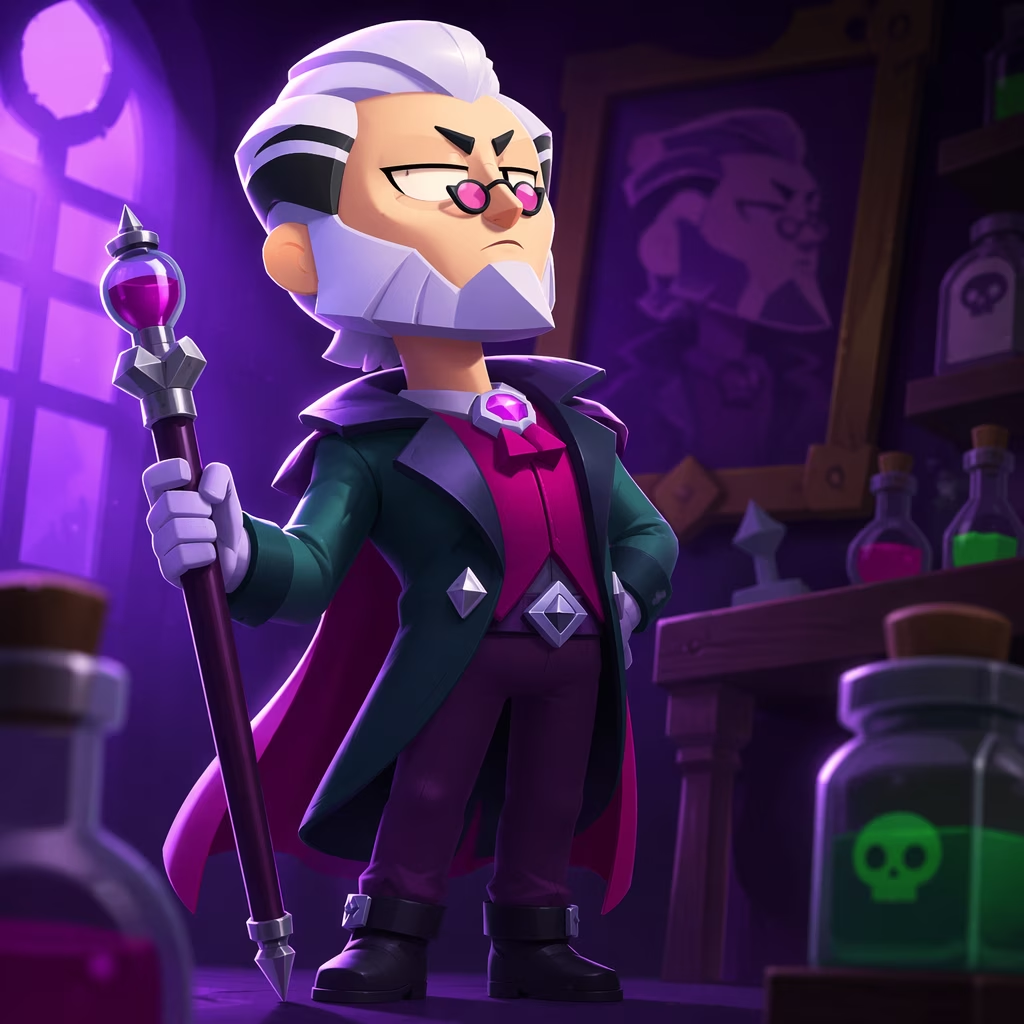
In the ever-expanding universe of Brawl Stars, few topics have ignited as much lively chatter as the polarizing cosmetic options for the spectral archer Angelo. A recent wave of discussion swept across the game's vibrant subreddit, where players dissected the flamboyant skins with a mixture of awe, confusion, and razor-sharp wit. The conversation revealed more than just aesthetic preferences; it exposed a playful yet profound community grappling with style, representation, and the very soul of character design.
At the center of the storm stand the Angelo skins, a series of looks that range from whimsical to bewildering. One player, going by the handle LawrieDaBadCop, encapsulated the divide perfectly by referencing the “Dionysus Angelo Pose,” a nod to classical mythology where gods and mortals alike draped themselves in elaborate, often gender-bending garments. The comment highlighted how some skins evoke ancient androgyny, drawing lines between the flamboyance of mythical elves and the fluid identity of Angelo. Yet for every admirer of this creative risk, a skeptic emerged. Another commenter openly questioned the narrative logic behind an elf-inspired skin, suggesting a visual swap might be more coherent. This push-and-pull has turned the Angelo range into a mirror reflecting the community’s broader feelings about identity expression in interactive entertainment.
Humor has been the glue holding this debate together, softening the sharp edges of critique with a layer of infectious comedy. A user named AsparagusLow2152 cut through a tense thread with the irreverent query, “May he cry?” The seemingly nonsensical question broke the tension and demonstrated how the Brawl Stars fandom uses absurdist humor to process complex topics. Such lighthearted banter is not a distraction but a deliberate tonal choice; it transforms a potentially divisive conversation into a shared joke that everyone is in on. This approach allows players to explore sensitive themes like gender fluidity and character lore without the conversation turning toxic. Indeed, the ability to laugh at the bizarre fashion choices while passionately discussing them is a hallmark of this community’s resilience and creativity.
The discourse has also forced a reckoning with how skins influence gameplay and identity. Notably, the Wasabi Angelo skin, with its tengu-inspired mask and ethereal palette, has been cited as a game-changer. A user named DizziDrawsThings observed that the skin’s distinct aesthetic alters the very feeling of controlling Angelo, making the archer feel more like a supernatural trickster than a straightforward marksman. This sentiment echoes a truth known to competitive and casual players alike: a brawler’s appearance is never just cosmetic. It shapes the psychological bond between player and character, influencing aggression, positioning, and even the joy derived from a hard-fought match. When a skin is perceived as a fashion faux pas, that connection frays; when it resonates, it can elevate a brawler to icon status. The Angelo debate thus becomes a referendum on which skins empower the archer’s identity and which ones feel like a mismatched costume.
Peeling back the layers of memes and one-liners reveals a serious undercurrent about diversity in gaming. Many defenders of the Angelo skins see them as a bold stride toward broader representation, particularly within a genre that has historically leaned on rigid character archetypes. The androgynous elegance of certain looks, combined with the deliberate blurring of elf-like femininity, offers a refreshing departure from the hyper-masculine templates often seen in mobile shooters. Players argue that such designs validate an audience hungry for avatars that reflect a spectrum of identities, not just the traditional ones. However, the pushback is equally telling. Critics contend that representation must feel organic rather than grafted on — when a skin seems forced or overly extravagant for its character, it risks undermining the very cause it aims to support. This tension spotlights the delicate balancing act that developers face: pushing creative frontiers while respecting a brawler’s core personality.
The following table summarizes the key sentiments animating the discussion, drawn directly from the subreddit’s pulse:
| Sentiment Category | Key Player Comments & Reactions | Broader Takeaways |
|---|---|---|
| Adoration & Wonder | “Dionysus Angelo Pose” evokes classic mythic glamour; love for the eccentricity. | Creative risk is celebrated; pushes visual boundaries. |
| Confusion & Puzzlement | Questions about elf-like design logic; calls for swaps with other brawler aesthetics. | Desire for cohesive lore and character-appropriate fashion. |
| Humorous Relief | “May he cry?” injects levity; quips about existential brawler angst. | Laughter defuses tension and strengthens community bonds. |
| Psychological Impact | Wasabi Angelo transforms the brawler’s feel; skins alter gameplay mentality. | Visual identity directly influences player connection and strategy. |
| Diversity & Representation | Praise for androgynous design as inclusive; criticism of forced extravagance. | The community yearns for meaningful, organic diversity in characters. |
This multifaceted dialogue echoes a cultural shift happening across the gaming landscape. In 2026, years after the initial Angelo release, the conversations have matured. What began as a simple fashion debate now serves as a case study in how live-service games can foster genuine connection. The Brawl Stars community has repeatedly proven that beneath the chaos of solo showdowns and gem grabs lies a thoughtful collective that cares about the stories their brawlers tell. Every new Angelo skin launch is met not with passive acceptance but with the kind of spirited analysis once reserved for competitive meta shifts.
As the sun sets on another Brawl Talk and fresh content updates roll out, one thing is certain: the Angelo skins will continue to provoke, delight, and confound. Whether they are viewed as groundbreaking triumphs or hilarious misfires, they have cemented their place in the game’s folklore. The endless stream of memes, fan art, and mock-philosophical debates ensures that even the most bewildering cosmetic becomes a thread woven into the fabric of the community. In a title where a grinning cactus and a luchador crow coexist, perhaps confusion is the highest form of appreciation. And if the players can still pause between matches to ask with a smirk, “May he cry?” then Brawl Stars has succeeded in creating far more than a game — it has sparked a world where fashion, identity, and laughter unite.
In the end, the Angelo phenomenon teaches an invaluable lesson: a skin is never just a texture map. It is a conversation starter, a statement, and a mirror held up to a community that refuses to take itself too seriously, even as it grapples with ideas that matter deeply. The next time you drop into a showdown sporting the latest flowing robe or shimmering mask, know that you are part of an ongoing, uproarious, and beautifully tangled discussion — one that shows no signs of fading.
Comments