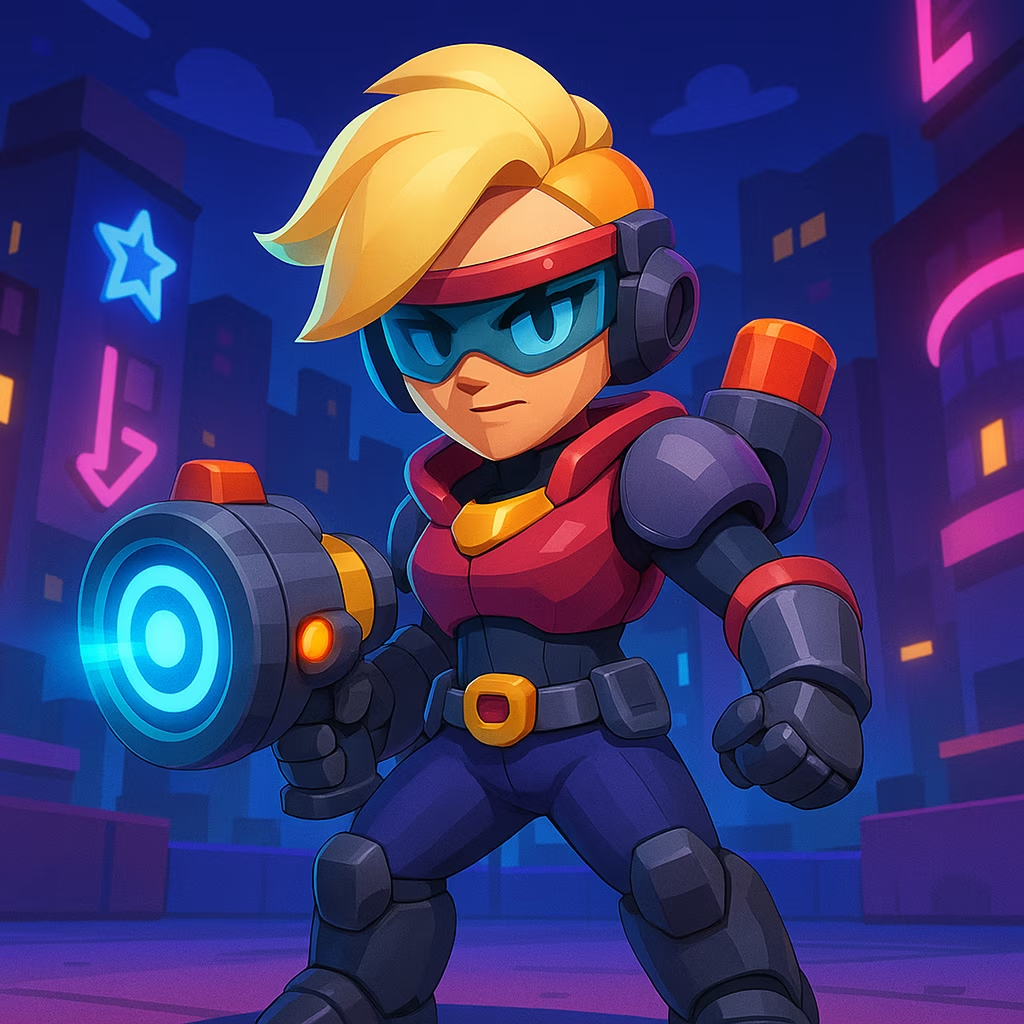
In the vast digital landscape where Brawl Stars fans congregate, a single post can become a cultural touchstone, a moment of collective pause amidst the chaos of online interaction. When a user known as darkness7979 shared an image with the simple, visceral caption "What the fuck is this," they did more than express personal confusion; they cast a stone into the placid waters of the community, sending ripples of shared bewilderment that would captivate hundreds. This was not merely a question but an invitation—a summons for others to gaze upon the same digital oddity and share in the universal human experience of confronting the utterly inexplicable. How often does a single line of text, devoid of context, manage to encapsulate the surreal nature of internet culture so perfectly? The immediate, visceral reaction from the community proved that bewilderment, in its purest form, remains a powerful social glue.
The Wave of Reaction: From Laughter to Existential Dread
The initial spark from darkness7979 ignited a wildfire of responses, each comment a flicker of the community's collective consciousness. The reaction was not monolithic but a spectrum of human emotion played out in real-time. At one end, humor reigned supreme. Users like "Admirable_Jeweler_33" immediately invoked the name of Kairos, a beloved content creator known for his animated, often flabbergasted reactions to in-game surprises. "Lmao Kairos’s reaction," they wrote, a statement that served as both a joke and a cultural shorthand. It signaled to others: If this would stump Kairos, then we are all justified in our confusion. This reference acted as an anchor, a shared point of understanding in a sea of absurdity. Another user, "ZyXlEp," built upon this, simply stating, "Kairos is flabbergasted," reinforcing the communal joke. Isn't it fascinating how online communities create their own pantheon of figures whose hypothetical reactions become a unit of measurement for strangeness?
The creativity in the humor was equally striking. User "spleenerpleener" took the absurdity and filtered it through the lens of popular culture, crafting a comment that referenced hip-hop artist Kendrick Lamar: "Kendrick Lamar: MUSTARDDDDD." This wasn't just a non-sequitur; it was an act of remixing, of applying an external cultural framework to internal chaos. It demonstrated the community's knack for transformative humor, turning confusion into an inside joke layered with external references. The comment section became a collaborative comedy stage, with each user building upon the last's bewildered take.
| Reaction Type | Example Comment | Community Role |
|---|---|---|
| Referential Humor | "Lmao Kairos’s reaction" | Creates shared cultural touchstones |
| Absurdist Commentary | "Kendrick Lamar: MUSTARDDDDD" | Encourages creative, transformative jokes |
| Existential Critique | "I felt genuine horror..." | Prompts deeper reflection on community health |
| Shared Bewilderment | Various "What is this?" comments | Fosters immediate communal bonding |
The Shadow in the Laughter: A Critique of Digital Culture
Yet, not all who witnessed the post found mirth in the madness. For some, the collective engagement with sheer nonsense curdled into a sense of unease, even horror. User "JackRipps" voiced a starkly different perspective: "I felt genuine horror the more I read on. This community is brain dead." This comment cut through the laughter to tap into a profound critique of modern internet discourse. Where some saw harmless fun, others perceived a worrying normalization of incoherence—a descent into a space where meaningful interaction is drowned out by the relentless pursuit of the next absurdist meme. Was this post a harmless joke, or a symptom of a deeper cultural malaise within online gaming spaces?
This sentiment found an echo in "Fluffy-Perception929," who pointed a finger at the broader digital environment, suggesting that unfettered internet access for younger audiences cultivates spaces where the bizarre is not just accepted but expected. This perspective introduces a critical duality to the event. The same post that served as an icebreaker and a source of communal laughter for many was, for others, a chilling reminder of the potential for online spaces to devolve into arenas of low-stakes, high-volume nonsense. Can a community truly be strengthened by moments of shared confusion, or does such engagement ultimately erode the potential for substantive discussion? The post, in its glorious ambiguity, forced the community to confront these questions.
The Unifying Power of Shared Perplexity
Despite—or perhaps because of—this stark dichotomy of reactions, the enduring legacy of darkness7979's post is one of powerful, albeit complex, community engagement. The event acted as a social catalyst. Whether players approached it with a grin or a grimace, they were compelled to participate, to add their voice to the chorus of confusion. This is the paradoxical strength of online communities: they are forged not only in shared victory or strategy but in shared, visceral experiences of the unexpected.
-
It sparked conversation where there might have been none.
-
It fostered creativity, as seen in the layered, referential jokes.
-
It held a mirror to the community, revealing its diverse perspectives on humor, culture, and discourse.
-
It reminded every participant that they were not alone in navigating the weird and wonderful world of their shared interest.
The discourse around the post became a microcosm of the internet itself—a place of simultaneous creation and critique, laughter and concern. It proved that a moment of collective bewilderment can be more binding than a dozen routine interactions. In the end, the post's content was almost secondary. Its true function was as a vessel for human connection. It asked a simple question that had no clear answer, and in doing so, it provided the answer to a more important one: what holds a digital community together? Sometimes, it is the courage to collectively look at something inexplicable and simply say, "What the fuck is this?" 🤔💥
The year is 2026, and the digital footprints of moments like these remain. They are archived lessons in internet anthropology, showing how gaming communities process the surreal. The Brawl Stars community, through this single post, demonstrated its vitality. It showed it could be a place of lighthearted fun and serious reflection, often at the same time. In a world increasingly saturated with curated content and predictable reactions, there is a raw, authentic value in these unscripted moments of unified confusion. They are the digital campfire around which strangers gather, not to hear a defined story, but to share the experience of wondering what the story could possibly be.
Comments