Let me tell you, as someone who's been playing platform fighters for years, the last few years have been a rollercoaster. I remember when Nickelodeon All-Star Brawl first dropped in late 2021. Honestly, I didn't expect much—another licensed game trying to ride the Smash Bros. wave. But I was surprised. The developers clearly loved the source material, bringing in deep cuts from shows like Aaahh!!! Real Monsters and The Wild Thornberrys for us older fans. The mechanics were surprisingly intricate, clearly designed to appeal to the competitive crowd. It felt like a passion project, albeit one with some rough edges.
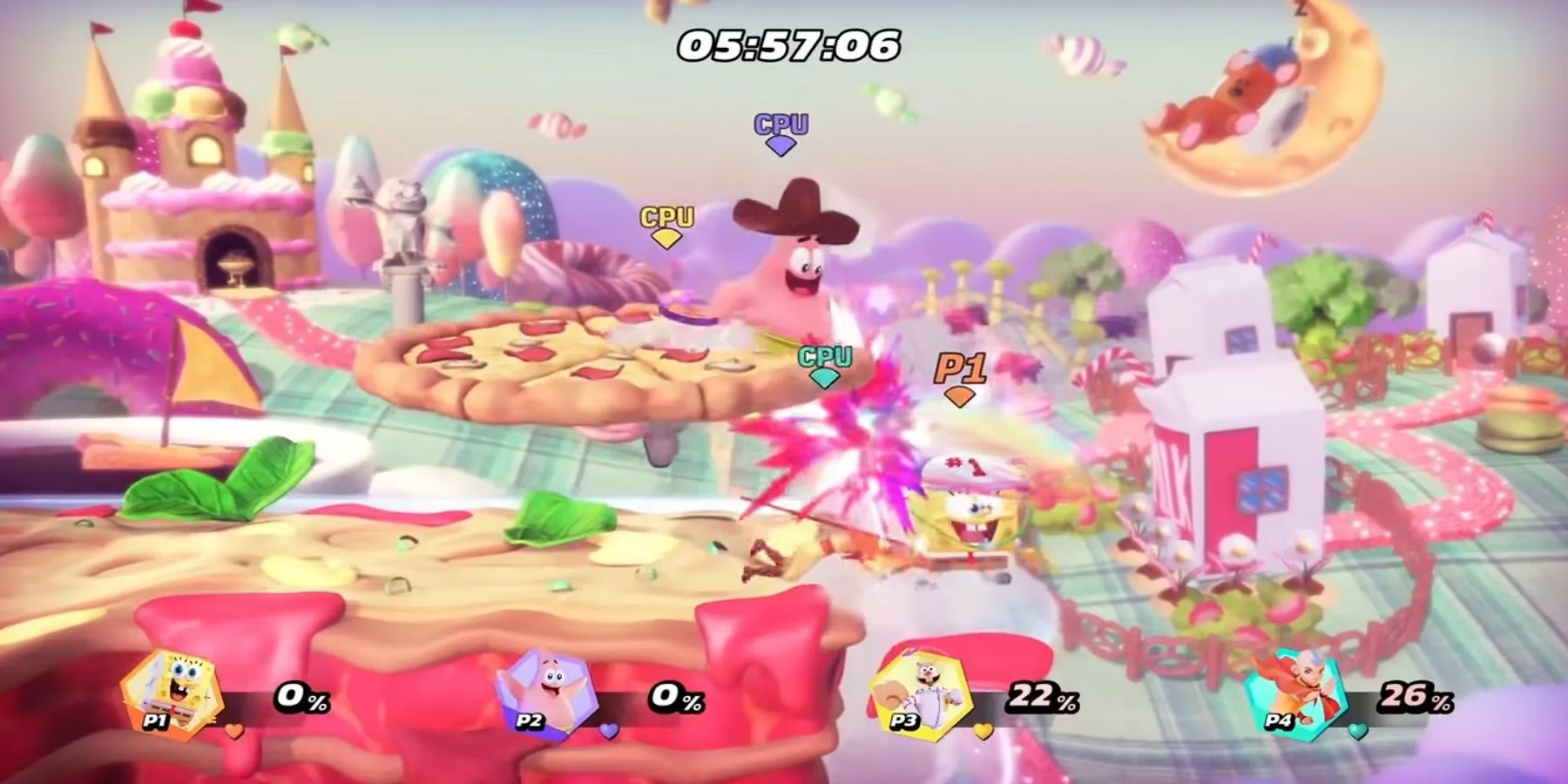
Fast forward to 2026, and the landscape has shifted dramatically. The game's reception was a mixed bag. On one hand, the core fighting was solid and fun. On the other, the criticism was loud and clear: no voice acting, a bare-bones single-player Arcade mode, and a severe lack of alternate costumes at launch. The developers did listen, adding free skins later, which was a good move. But in a genre that's all about personality and flair, starting with silent characters in their default looks felt... hollow. It highlighted a central issue: the game seemed to be working with a limited budget, which impacted its initial polish.
Then came MultiVersus. I'll admit, when it was first announced, I rolled my eyes. It looked like a cynical cash-in on the same idea. But boy, was I wrong. Despite the director saying the idea was years in the making, MultiVersus launched with a bang and seemed to immediately address many of the issues plaguing Nick All-Star Brawl. Let's break down why it became such a formidable competitor:
-
Roster Power: Warner Bros. dug deep into its vault. We're not just talking cartoons; it's a pop-culture mashup. You've got Batman fighting Shaggy, Arya Stark from Game of Thrones facing off against Bugs Bunny. It combined timeless classics (Looney Tunes, Scooby-Doo) with modern Cartoon Network icons (Adventure Time, Steven Universe) in a way that felt both calculated and exciting.
-
Gameplay Innovation: Instead of just being another 1v1 fighter, it heavily emphasized 2v2 team play. This wasn't just a gimmick; it fundamentally changed how you approached battles and added a fresh layer of strategy.
-
Business Model & Support: It launched as a free-to-play game with full cross-play support. More importantly, Warner Bros. showed clear, ambitious faith in it, promising and delivering regular updates, new characters, and modes on a consistent schedule.
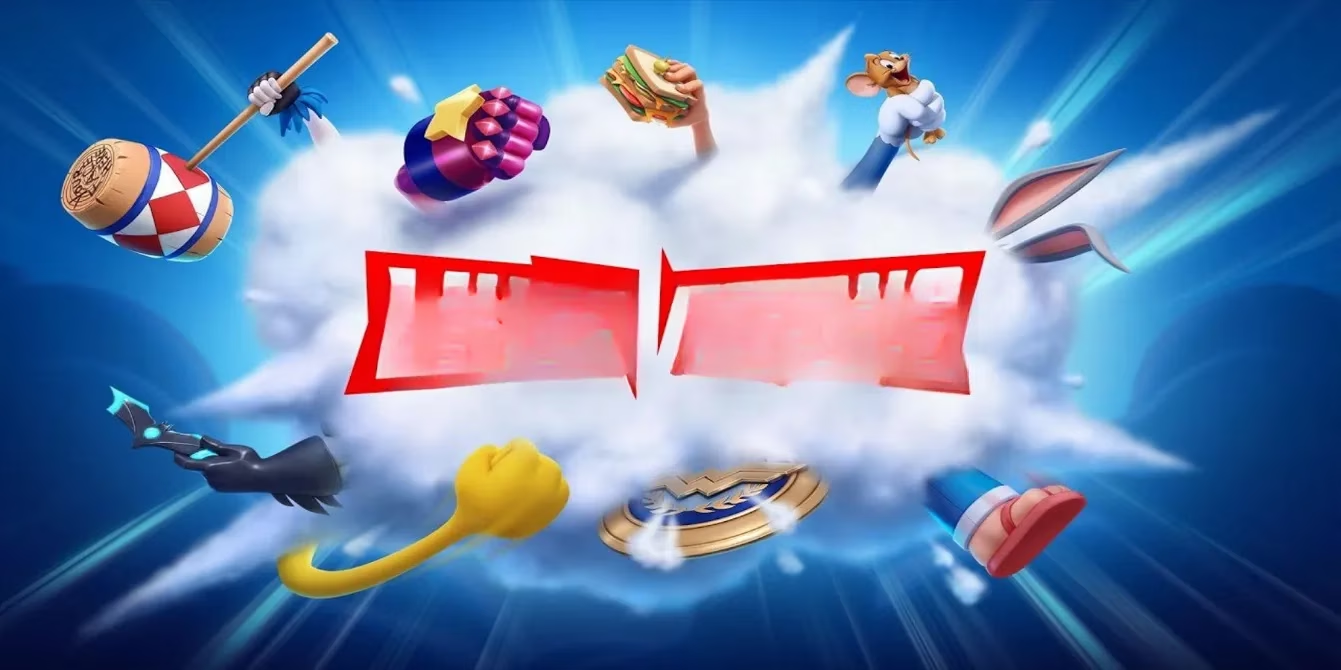
Looking back, MultiVersus didn't just emulate Nickelodeon All-Star Brawl's roster philosophy—it aimed to surpass it in every way. Its marketing and feature set seemed designed to directly usurp the spotlight. This put Nick All-Star Brawl in a tough spot. The game was fun at its core, but it was lacking in the content and ongoing support that players in 2026 have come to expect from live-service games.
The future of Nickelodeon All-Star Brawl always hinged on one thing: Nickelodeon's commitment. The developers, Ludosity and Fair Play Labs, showed they cared by responding to feedback. But could they get the budget and backing from the corporate side to truly compete? Adding DLC characters and skins was the bare minimum. To flourish, the game needed:
-
A substantial content expansion (new stages, detailed single-player modes).
-
The addition of voice acting to bring its iconic characters to life.
-
A more robust and reliable online infrastructure.
-
A clear, communicated roadmap for long-term support.
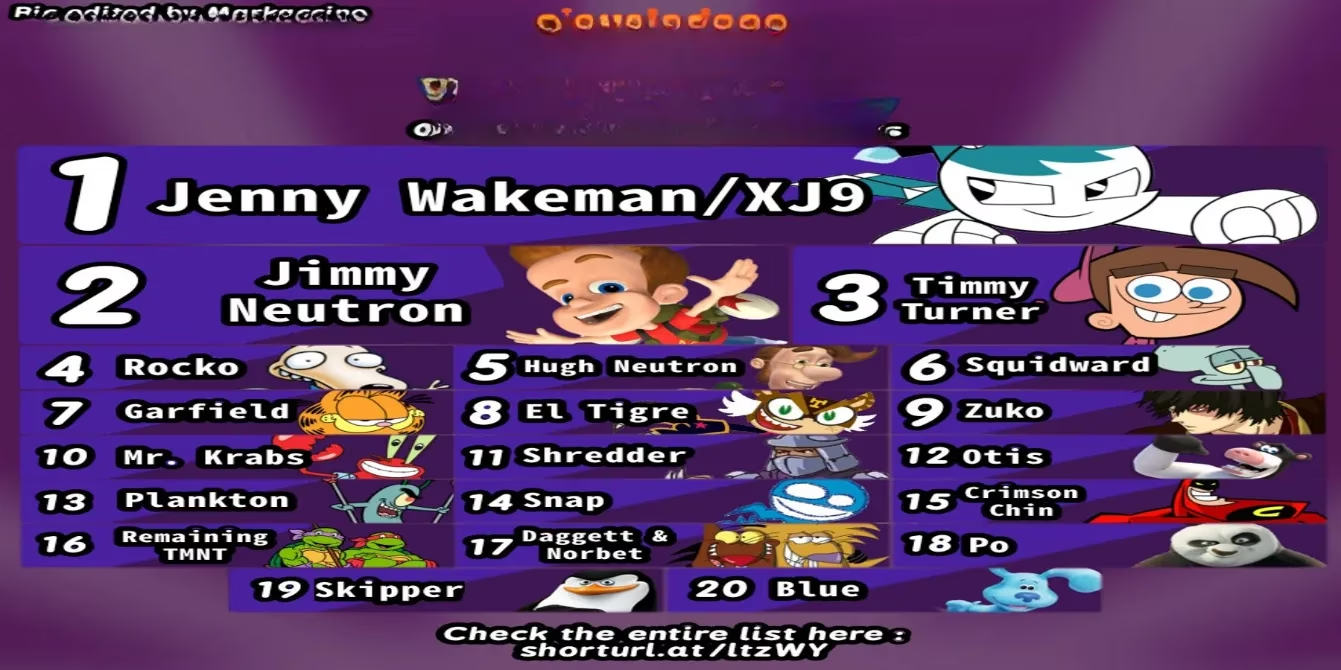
In the end, the battle between these two games became a case study in the modern gaming landscape. It's not enough to have a fun core gameplay loop anymore. Players want personality, polish, and a promise of growth. MultiVersus, backed by Warner Bros.'s deep pockets and vast IP library, launched with that promise baked in. Nickelodeon All-Star Brawl, a passionate project with clear constraints, had to fight an uphill battle to prove it could offer the same long-term value.
As of 2026, the lesson is clear for any publisher entering the platform fighter arena. It's a genre fueled by nostalgia and community. You need to honor the source material with quality (voice acting, visuals), support the game post-launch with consistent content, and offer a unique twist on the formula. Nickelodeon All-Star Brawl had the heart and the fighting mechanics, but in a head-to-head match against a well-supported competitor with a broader appeal and a free-to-play model, it struggled to keep its footing on the platform. Its legacy is that of a scrappy, passionate underdog that showed what could be possible with beloved Nickelodeon IP, even if it ultimately couldn't secure the resources needed to win the war.
Comments