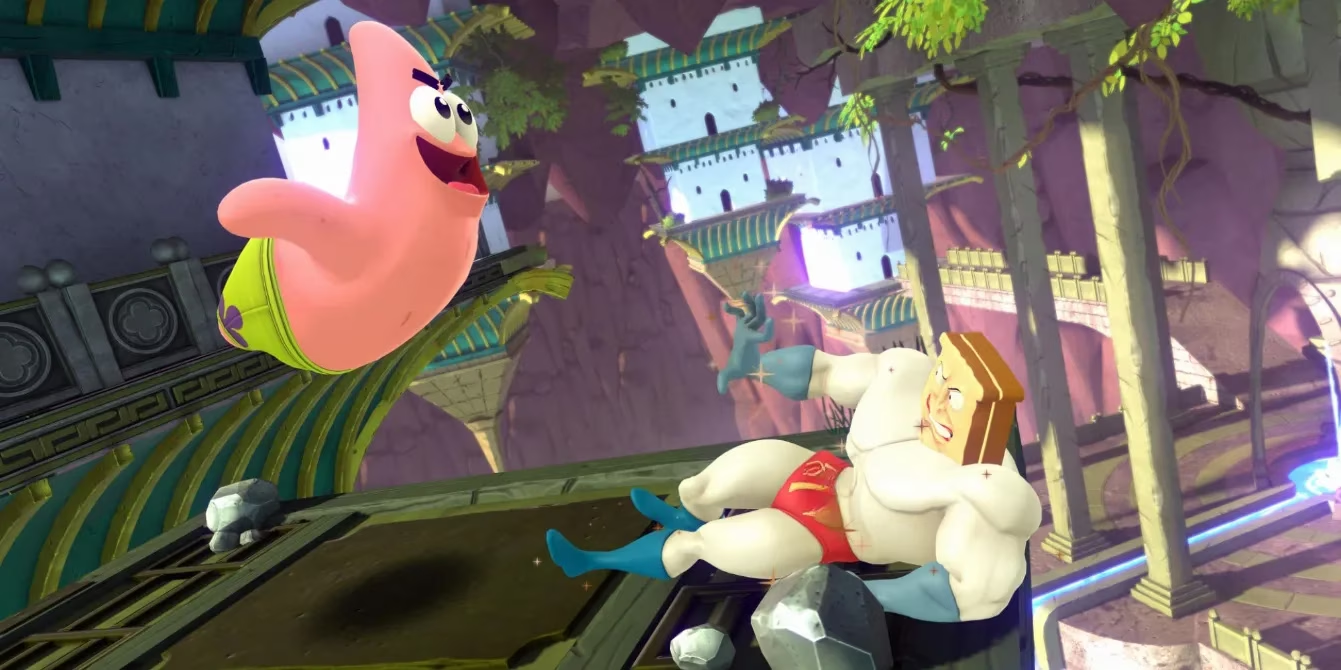
Let me tell you, as a certified veteran of living room warfare and controller-throwing tantrums, the moment I booted up Nickelodeon All-Star Brawl in 2026, I felt a void in my soul deeper than the Mariana Trench. Here I was, the self-proclaimed king of competitive Smash, the guy who could wave-dash in my sleep, and I should have been in heaven. A game built for me! No items to argue about! No chaotic stages to ban! Just pure, unadulterated, one-on-one combat. Yet, as I watched SpongeBob SquarePants execute a frame-perfect wavedash across the screen, a profound sadness washed over me. I wasn't playing a celebration of my childhood; I was beta-testing a ghost town's tournament scene.
 .jpg)
.jpg)
My journey is a tale of two identities, a gaming Jekyll and Hyde. I spent years as the casual chaos enthusiast. My weekends were a glorious mess of Adventure Mode runs, frantic scrambles for that golden hammer, and laughter-filled free-for-alls where the only strategy was "hit everything that moves." I wouldn't trade those memories for all the EVO championships in the world. But then, the dark side called. I became the competitive Smash sociopath, the party pooper who would rather analyze frame data than have fun. I'd show up to gatherings, demand items be turned off, and then handicap myself with a single Joy-Con just to feel slightly less monstrous. It was a delicate, self-loathing balance.
So, when Nick Brawl (a far superior name, let's be real) was announced with its hardcore pedigree—wavedashing! Rollback netcode!—I thought I'd found my promised land. Finally, a game that understood! No more awkward conversations! But the reality in 2026 is a chilling lesson in missed opportunity. The game launched as a skeleton, a husk of potential, and its post-launch life has done little to change that core identity crisis.
The Great Nickelodeon Identity Crisis of 2026
Let's break down the fundamental, universe-altering mistake:
| Feature | Super Smash Bros. Ultimate (The Gold Standard) | Nickelodeon All-Star Brawl (The Cautionary Tale) |
|---|---|---|
| Target Audience | EVERYONE 👨👩👧👦 | Tournament hopefuls & content creators 🎮 |
| Single-Player Soul | World of Light, Classic Mode, Spirits, Home-Run Contest | A bare-bones Arcade ladder. That's it. 😴 |
| Party Potential | Items, wild stages, 8-player smash, stage morph | Competitive mode, simple stages, focused on 1v1. 🏆 |
| Nostalgia Delivery | Music, trophies, classic references, fun events | A roster that reminds you Nickelodeon has live-action shows. 🤔 |
This table isn't just data; it's a tombstone for what could have been. Smash understands its power. It is a crossover event, a playable museum, and a party game first. The competitive scene is a magnificent, emergent byproduct. Nick Brawl tried to build the competitive scene first and forgot to build the game around it. It's like constructing a Olympic-sized swimming pool in the middle of a desert and wondering why no one's having a pool party.
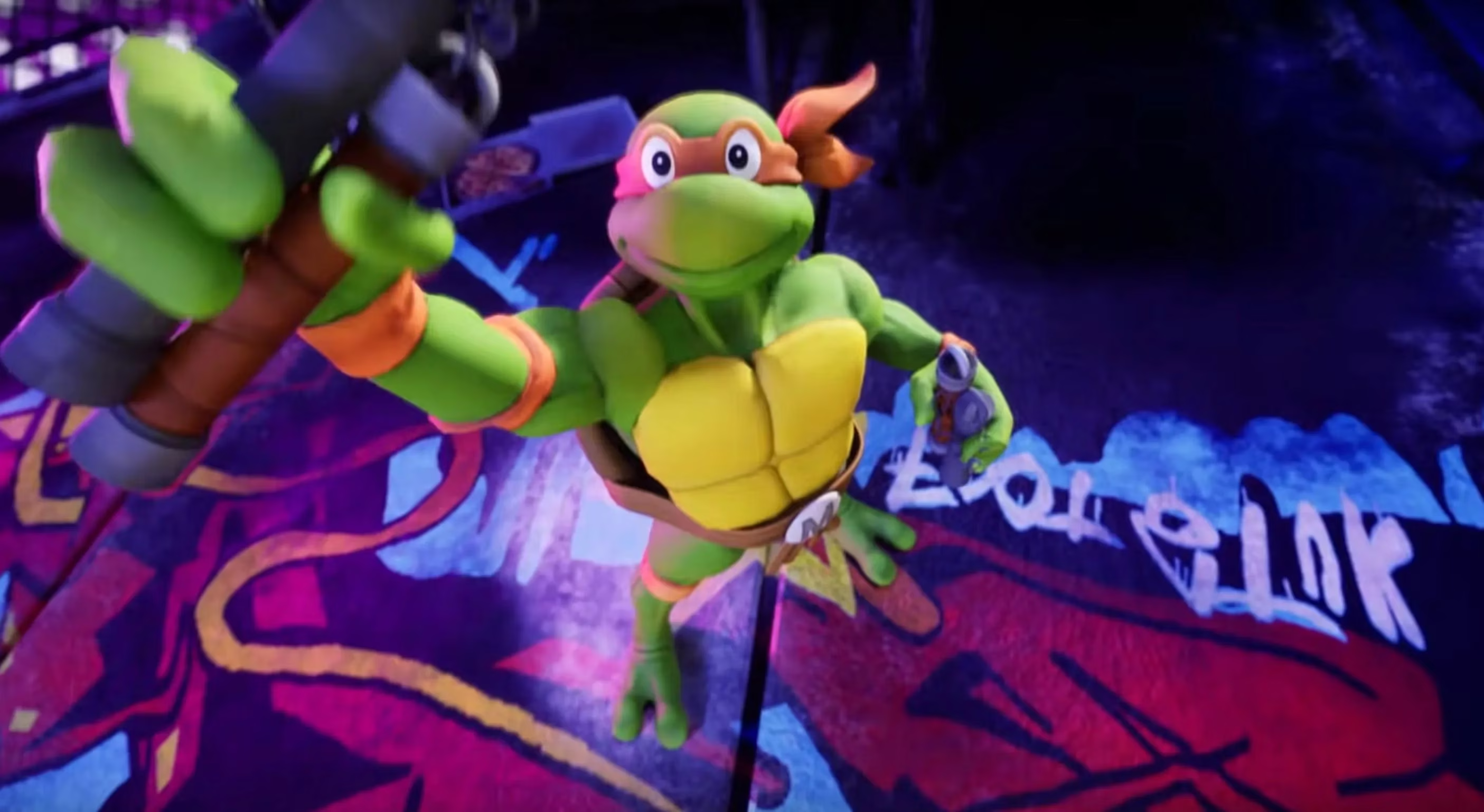
The roster itself is a bizarre time capsule. By 2026, the landscape of nostalgia has shifted, but the game remains stuck in 2021. Where are the deep cuts? The characters from shows that defined later childhoods? It feels like a boardroom's idea of "iconic" rather than a fan's love letter. And SpongeBob? That optimistic, porous goofball? He's been conscripted into serving only the most hardcore, technical players. It's like making Mickey Mouse the star of a Dark Souls clone—it just feels wrong.
The Ghost Town of High-Level Play
Let's talk about the elephant in the online lobby. The rollback netcode is, admittedly, a technological marvel compared to Smash's often-poor online experience. But you know what you need for good netcode? OTHER PEOPLE. By focusing so intently on courting a fickle, hyper-specific competitive audience that was always going to drift back to Smash Ultimate or the next big thing, Nick Brawl failed to cultivate the casual base that sustains a game's population. The competitive mode is a beautifully tuned race car... with nowhere to race but empty highways.
I've spent hours in matchmaking in 2026, and the silence is deafening. Where are the kids? The families? The people who just want to see Patrick Star belly-flop on someone? They were never given a reason to stay. No wacky items to chase. No engaging single-player adventure to get lost in. No sense of celebration. It's all business, and for a Nickelodeon game, that's a catastrophic brand failure.
A Lesson for the Future
Nickelodeon All-Star Brawl will stand as a monument to a fundamental misunderstanding. In 2026, we see live-service games and platform fighters come and go, and the successful ones always follow Smash's blueprint: cast the widest net possible. You hook players with joy, chaos, and nostalgia. The competition grows naturally from that fertile soil. You don't start by planting a single, fragile orchid and hoping a forest grows around it.
The most damning evidence? Remember the fan mod that added voice lines to the game? It went viral because it addressed a gaping wound—the lack of soul. The characters felt like marionettes, not beloved icons. That mod did more to make the game feel like a Nickelodeon product than the official developers did at launch, and that sentiment still echoes today.
So here I am, the competitive Smash loser, finally getting the purely competitive Nickelodeon game I supposedly wanted. And I'm bored. I'm lonely. I miss the chaos. I miss the Pokéballs. I miss the sense that I'm playing in a living, breathing universe of childhood joy, not a sterile laboratory for frame-perfect maneuvers. Nickelodeon All-Star Brawl tried to build an esport before it built a playground, and in 2026, all that's left is the echoing silence of a swing set with no one to push it. What a devastating, hilarious, and utterly predictable shame.
Data referenced from HowLongToBeat helps contextualize why a platform fighter like Nickelodeon All-Star Brawl can feel like a “ghost town” in 2026: when the only substantial solo offering is a short arcade-style ladder, many players hit the end of the road quickly, and without sticky party modes, collectibles, or a longer-form campaign loop to keep casuals engaged, the matchmaking pool naturally shrinks until even excellent netcode can’t solve the lack-of-opponents problem.
Comments