In the digital arena where childhood memories awaken and collide, Nickelodeon All-Star Brawl emerges not merely as a game, but as a vibrant tapestry woven from the threads of competitive spirit and nostalgic whimsy. As the year 2026 unfolds, this platform fighter continues to evolve, its legacy built upon a foundation that masterfully blends the chaotic joy of cartoon free-for-alls with the precise, technical depth that beckons the most dedicated of competitors. It is a world where SpongeBob's porous optimism can clash with the stoic intensity of a Rocko's Modern Life throwback, all governed by a symphony of mechanics both accessible and profound.
The Core Choreography: A Triad of Tactics
At the heart of its combat lies a beautifully structured chaos. Every character, from the mightiest Reptar to the most unassuming Powdered Toast Man, dances to a rhythm of triads. Their movesets are divided into elegant sets of three—up, down, and mid—applying to light, strong, special, and aerial attacks alike. This system is less a rigid grid and more like a prism refracting a single beam of light into a spectrum of strategic possibilities. A player's intent determines the angle, and the game answers with a corresponding flourish of animated violence.
-
Light Attacks: The quick jabs and pokes of the dance, setting the tempo.
-
Strong Attacks: The powerful, committed steps where the game's unique "Rock, Paper, Scissors" priority system comes into play, creating a meta-game within each exchange.
-
Special & Aerial Attacks: The acrobatic leaps and character-defining flourishes that paint the air with personality.
Advanced Mechanics: The Hidden Currents Beneath the Cartoon Sea
For those who wish to dive deeper than the splashy surface, Nickelodeon All-Star Brawl offers a ocean of technical depth. The developers at Ludosity, in their wisdom, incorporated advanced movement techniques that echo the legendary Super Smash Bros. Melee. Wavedashing and wavelanding return, not as mere imitations, but as integral threads in the game's fabric. These movement options, combined with the deliberate absence of an air dodge and the presence of a dedicated strafe button, create a movement language that is both fluid and demanding. It is a language where mastery feels less like inputting commands and more like conducting the invisible currents of a sonic wave.
Furthermore, the defensive game subverts traditional fighting game expectations. Gone are universal shields; in their place is a pushback-block system that turns defense into a repositioning tool. This is complemented by parry-style perfect guards and a fascinating interaction with projectiles, which can be not only reflected but grabbed and stored for a future, unexpected retaliation. The aerial grab system adds yet another layer, making every jump a potential preamble to a devastating combo. This intricate web of mechanics is the perfect recipe for endless innovation, encouraging a metabolism of combat that constantly consumes and creates new strategies.
A Roster of Resonant Icons
What gives this mechanical framework its soul is the roster—a parade of Nickelodeon's most beloved and bizarre icons. The gameplay reveals have showcased matches that feel like lost episodes of a surreal crossover event:
| Matchup | Poetic Dynamic |
|---|---|
| CatDog vs. Lucy Loud | A symphony of conflicting dualities—two souls in one body versus one voice in a cacophonous family. |
| April O'Neil vs. Nigel Thornberry | The relentless pursuit of news crashing into the unpredictable, wild exuberance of nature. Smashing! |
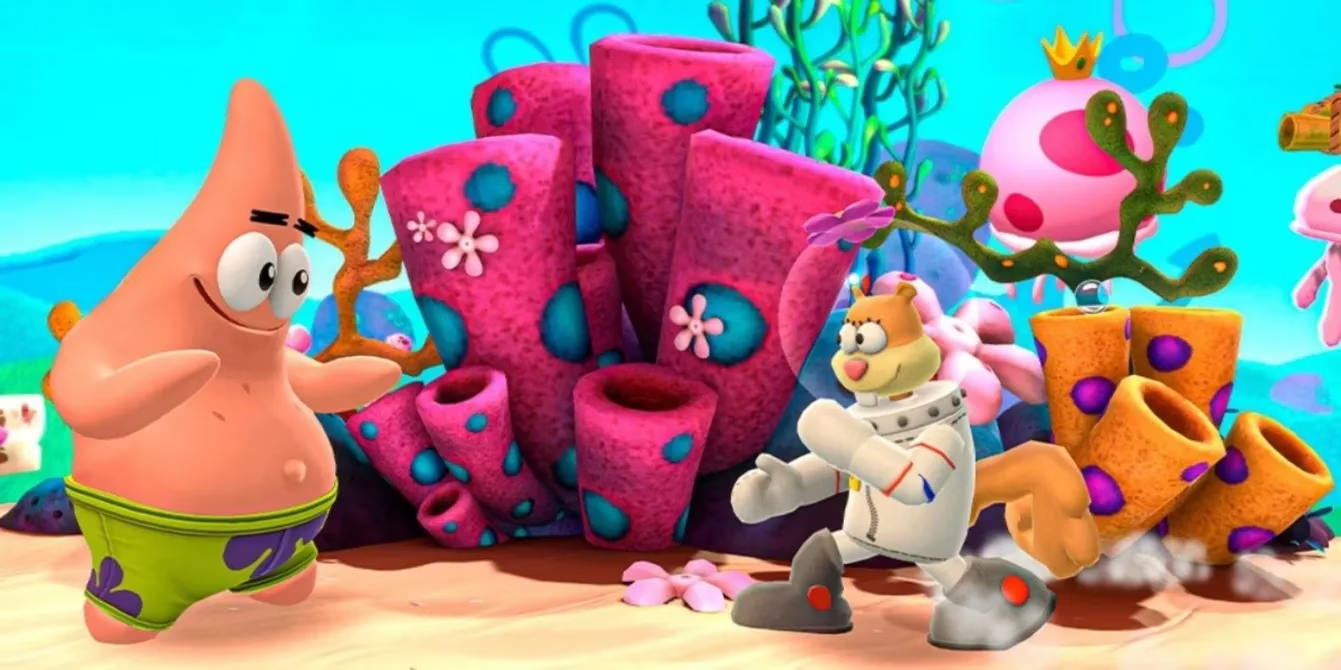
These are not just avatars with different stats; their whacky movesets, like SpongeBob's bubble wand or Patrick's inertia-defying belly flop, are extensions of their iconic personalities. Each fight tells a micro-story, a clash of cartoon cosmologies.
The Arena Expands: Platforms and Promise
As of 2026, the game's presence has solidified across the gaming landscape. It launched broadly, bringing its unique brand of mayhem to Xbox Series consoles, Xbox One, PS5, PS4, Nintendo Switch, and PC via Steam. The ongoing conversation within the community often revolves around the technical backbone supporting these cross-platform dreams, with features like rollback netcode being a fervent wish for seamless online battles that match the precision of local play.
The promise shown in those early showcases has blossomed. Nickelodeon All-Star Brawl stands as a testament to the idea that a game can wear a colorful, chaotic smile while hiding the sharp, elegant mind of a grandmaster. It is a celebration where the door is open to all—the casual fan seeking a laugh-filled brawl and the dedicated competitor seeking a deep, technical dance. In the end, it invites everyone to the party, offering a controller and a chance to write their own verse in its ongoing, poetic saga of slime and supremacy.
Comments