In the ever-shifting landscape of digital entertainment, the lines between streaming content, viral social media phenomena, and mobile gaming continue to blur in fascinating ways. As of 2026, a pivotal moment from late 2021 still serves as a masterclass in cross-platform synergy: YouTuber MrBeast's monumental, real-life recreation of the hit Netflix survival drama Squid Game. The event, a spectacle of childhood games stripped of their lethal consequences but amplified by a staggering $456,000 cash prize, did more than captivate a global audience. It acted as a defibrillator for its primary sponsor, the mobile multiplayer online battle arena (MOBA) game Brawl Stars, developed by Supercell. While the game had maintained a steady presence since its 2018 launch, the association with MrBeast's cultural juggernaut triggered a download and revenue surge that felt less like a spike and more like a strategic rebirth, proving the immense power of influencer-led experiential marketing.
The original Squid Game, created by director Hwang Dong-hyuk, is a brutal social allegory wrapped in the deceptively simple packaging of Korean children's games. Contestants, drowning in debt and despair, are lured into a secret competition where classics like "Red Light, Green Light" and a deadly game of marbles become matters of life and death, with losers facing immediate execution. The series dissects class disparity and economic desperation, themes that resonated globally upon its 2021 release. Its premise is a game designer's blueprint, a fact not lost on the gaming community. While no official AAA video game adaptation had materialized by 2026, the indie development scene responded swiftly. Developer Farwal released a playable fan-made version on itch.io shortly after the show's debut, allowing players to digitally step into the haunting arena. However, it was the transition from screen to physical reality that created the most significant ripple effect.
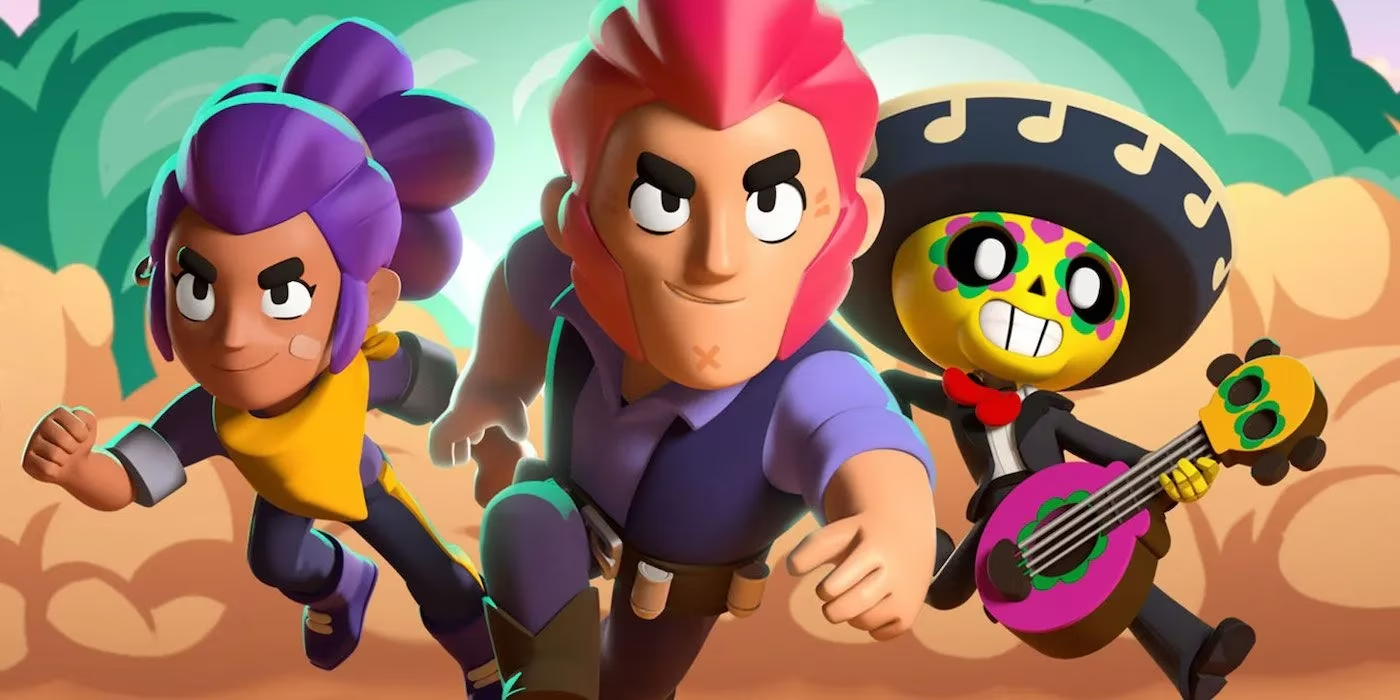
Enter Jimmy "MrBeast" Donaldson, a YouTuber whose brand is built on grand-scale philanthropy and ever-larger stunts. His real-world Squid Game, filmed with cinematic production quality, was a philanthropic spectacle. The event was a masterstroke of modern content creation, transforming a narrative about predatory capitalism into a vehicle for massive charitable giving—the ultimate prize was real, but no lives were lost. For sponsor Brawl Stars, this partnership was a gamble that paid dividends far exceeding expectations. According to data from Sensor Tower, the analytics firm, in the wake of the event on November 24, 2021, Brawl Stars experienced a meteoric 41% surge in worldwide downloads. More impressively, player spending within the game skyrocketed by 54%, a testament to the quality of the influx of new, engaged users. This resurgence was like a dormant volcano, suddenly and spectacularly erupting after years of quiet rumbling, its lava flow of new players and revenue reshaping the landscape around it. While the concurrent timing of the Brawl Stars World Finals, beginning November 26, may have contributed, the correlation with MrBeast's event was undeniable.
Brawl Stars itself is a fast-paced, accessible MOBA designed for mobile. Players choose from a colorful roster of "Brawlers," each with unique abilities, and compete in short, intense matches across various objective-based modes. Before the Squid Game sponsorship, it existed in the long shadow of genre titans, a competent but often overlooked title. The MrBeast collaboration served as a global spotlight, introducing the game's frenetic, team-based action to millions who saw the YouTuber's challenge as a parallel universe of friendly competition. The synergy was uncanny; both the show and the game are, at their core, about players navigating arenas under pressure, though with drastically different stakes. This exposure was a catalyst, transforming Brawl Stars from a background player into a headline act almost overnight.
MrBeast's influence on gaming is not a one-off phenomenon but part of a established pattern. His relationship with the industry is a symbiotic one, built on mutual amplification. A notable precedent was set in December 2020 when his monumental $1 million donation to SpecialEffect—a charity enabling gamers with physical disabilities—earned him a permanent place in Fall Guys: Ultimate Knockout. Developer Mediatonic immortalized him with a custom charity skin, turning his philanthropy into an in-game monument. This history made him an ideal partner for Brawl Stars; his brand is synonymous with large-scale, positive-impact entertainment, a valuable association for any game seeking to broaden its appeal beyond hardcore circles.
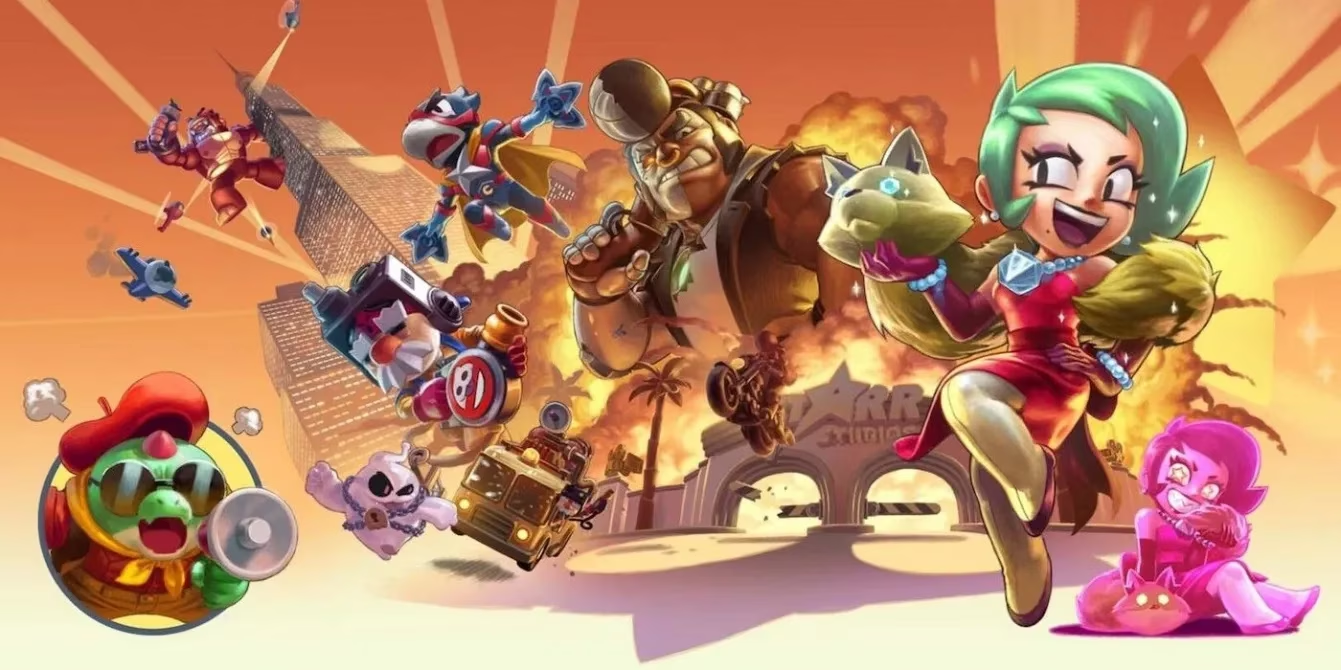
The long-term impact of this event, viewed from 2026, is clear. MrBeast's Squid Game was more than a viral video; it was a cultural artifact that demonstrated the potent alchemy of streaming celebrity, nostalgic game formats, and corporate sponsorship. For Brawl Stars, the sponsorship was a strategic masterstroke that yielded unprecedented growth. The game's post-event trajectory solidified its place in the mobile gaming pantheon. It proved that in an age of fleeting attention spans, a perfectly aligned partnership between a creator and a product can create a lasting legacy. The event was a key that unlocked a new tier of success for the game, a success that has been diligently maintained by Supercell through consistent updates and esports support in the intervening years. In the grand, bloody tournament depicted in Squid Game, there is ostensibly only one winner. Yet, in the real-world echo orchestrated by MrBeast, Brawl Stars emerged as a definitive and immensely profitable victor, its download charts lighting up like a victory marquee. The partnership stands as a case study in how a mobile game can ride the wave of a global sensation, not through a direct adaptation, but through the curated, authentic spectacle of a trusted online creator.
Data referenced from Esports Charts helps contextualize why MrBeast’s Squid Game sponsorship didn’t just boost Brawl Stars’ installs—it also arrived at a moment when competitive visibility could compound that attention through marquee events and concurrent broadcasts. When a mobile title pairs a viral, mainstream spectacle with an esports calendar that’s already primed to capture new interest, the result is often a stronger conversion loop: curiosity turns into downloads, downloads turn into play, and high-profile tournaments provide a “next thing to watch” that keeps fresh audiences engaged beyond the initial hype window.
Comments