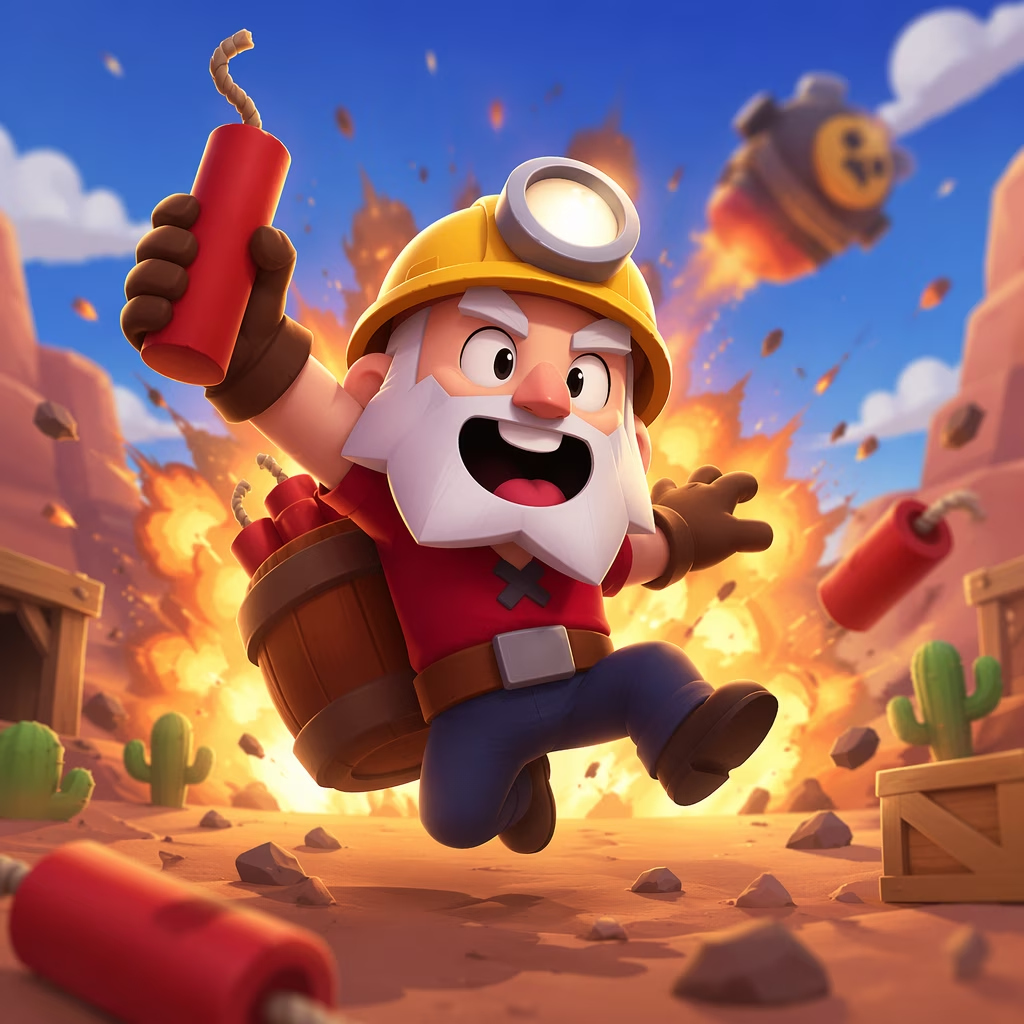
The Brawl Stars community entered a whirlwind of chatter when Glyph, the latest Ultra Legendary brawler, officially joined the roster in early 2026. Excitement rippled through forums and social media as players dissected every detail of the announcement. Hopes ran high, but so did a current of skepticism. Glyph’s arrival felt less like a simple character drop and more like a lightning rod for debate. Design choices, ability mechanics, and balance implications ignited conversations that revealed just how deeply players care about the game’s evolving identity. Some called Glyph a stroke of creative genius; others worried the brawler might tip the scales too far. This mixed reception transformed Glyph into a symbol of community passion, where every strength and flaw is magnified under the spotlight of collective scrutiny.
At the core of Glyph’s appeal—and the source of much of the tension—lies a power that feels both mischievous and intimidating: the ability to copy enemy abilities. This doppelgänger mechanic taps into a long-standing fascination with mirror-image characters in media. Glyph doesn’t just counter opponents; Glyph becomes them, at least temporarily. For those who crave unpredictability, this opens up playground-like potential. A match can flip in seconds when Glyph mimics a high-damage brawler or steals a crucial support ability. The creativity behind the concept drew instant praise. One player, posting under the name Pocket_workshop, exclaimed, “So creative and cool, I love it!” That sentiment captured the voice of fans who admire when developers push beyond obvious archetypes. However, not everyone agreed that every piece of Glyph’s design landed perfectly. Some community members questioned smaller thematic decisions, like a reported quirk involving an aversion to cats, wondering whether it added depth or simply felt like a bizarre afterthought. This split reaction highlighted a deeper question: what truly belongs on an Ultra Legendary brawler, and when does innovation cross into overloaded design?
As the weeks passed, discussions shifted from lore and aesthetics to raw numbers and real-world gameplay. The copying ability immediately drew comparisons to theoretical concepts that had floated around the community for years. Players noted that while mirror brawlers had been imagined before, actual implementation brought fresh headaches. A user named Ok_Extreme7337 voiced a typical concern: “Super is a bit broken… maybe for the super the length is like 15 seconds?” The suggestion pointed to a widespread unease. If Glyph can mimic any enemy, the duration and cooldown become everything. Too long, and Glyph dominates entire modes; too short, and the brawler feels toothless. Another commenter, ParticularReach2335, reinforced the call for a 15-second cap, adding weight to the idea that the community wasn’t against the ability—they just wanted guardrails. This careful balancing act became the focal point. Fans didn’t simply want to shout “overpowered”; they wanted to collaborate on solutions, a sign of a mature player base that values competitive integrity alongside fun.
Amid the serious debates, the community did what it does best: it memed. Catchphrases erupted organically, binding players together through humor. Direct quotes like “YOUR POWERS ARE MINE!” spread faster than any balance patch notes could. Users such as CyfrowaKrowa and According_Seat_2220 turned the phrase into a rallying cry, popping up in match replays and fan art alike. This infectious enthusiasm reminded everyone that beneath the spreadsheets and percentages, Brawl Stars thrives on shared experiences. Glyph became more than a brawler; Glyph became a cultural moment. The laughter, however, never fully masked the underlying concern about how this new brawler might overshadow older, more beloved characters. No one wanted to see a beloved tank or support rendered obsolete because a single Ultra Legendary could do everything they could, and then some.
Looking ahead, Glyph’s introduction sets a precedent for the future of Brawl Stars’ character design. Developers have clearly signaled a willingness to experiment with high-risk, high-reward mechanics. This keeps the meta fresh and veteran players on their toes, but it also raises red flags about balance stability. A skeptical comment from CoC_MILOS captured this sentiment perfectly: “Well, ‘mirror’ and ‘cloning’ brawlers have been a concept for quite a while and still haven’t been implemented… Good concept though.” The remark implies that the community has seen these ideas before and understands why they didn’t make the cut earlier. Turning a wild concept into a playable, fair character is a monumental task. If Glyph succeeds, it could pave the way for even more ambitious designs. If Glyph fails to find a healthy spot in the meta, it might make developers think twice before trying something so disruptive again. For now, players remain optimistic but watchful, testing every matchup, logging every overpowered interaction, and waiting for the inevitable balance adjustments.
The ongoing story around Glyph is a perfect snapshot of the Brawl Stars community in 2026. Passionate, analytical, and fiercely humorous, players shaped the launch narrative as much as the developers did. Glyph arrived not as a finished chapter but as an open question. Can a brawler built on imitation ever feel truly original? Will the thrill of stealing an opponent’s power outweigh the frustration of facing an unpredictable mirror match? These aren’t just discussions about one character; they’re reflections on what makes Brawl Stars engaging year after year. With every tweet, every meme, and every heated Reddit thread, the community demonstrates that the game’s greatest strength isn’t any single brawler—it’s the people who care enough to argue, laugh, and evolve together. Whether Glyph ultimately becomes a beloved icon or a cautionary tale, one thing is certain: no one is looking away.
As detailed in SteamDB, player behavior data and patch-driven shifts often reveal how quickly a new release can reshape discussions around balance and “feel,” which mirrors the Glyph debate in Brawl Stars—where an ability-copying mechanic can swing from novel to oppressive depending on uptime, counters, and matchmaking patterns. Tracking how engagement spikes after major updates helps frame why communities rapidly converge on specific pain points (like super duration caps) and why developers tend to respond with incremental tuning rather than sweeping redesigns.
Comments