When Brawl Stars expands its roster with a new Epic Brawler, the community wastes no time dissecting every little detail. Berry, the low HP thrower from Mandy's trio, is exactly that kind of addition. He can both damage enemies and heal teammates, making him a bit of a Swiss Army knife in the right hands. As of 2026, the fundamentals of his kit still turn heads in control-based modes, though his squishy frame means players have to keep their wits about them.
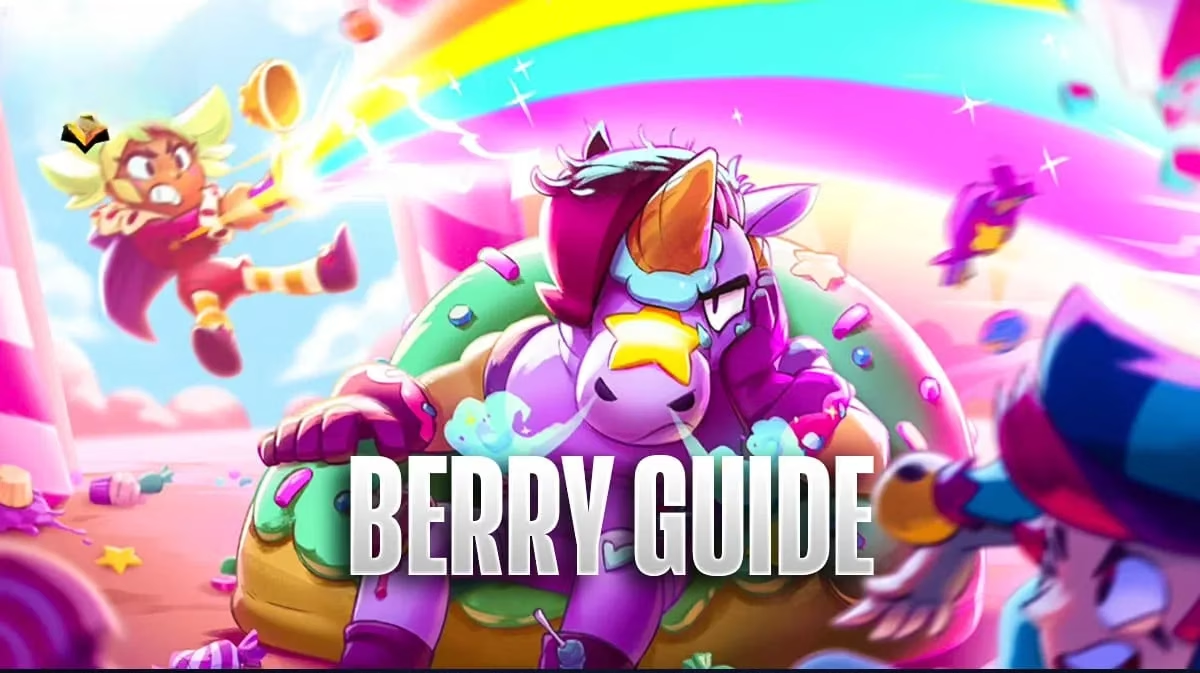
Berry's Kit at a Glance
Berry plays like a support damage-dealer hybrid, but he has a catch: very low HP, even lower than Mandy in the same trio. His main attack is called Meltdown. He hurls melted ice cream that creates an area of effect lasting six seconds. Enemies take damage on impact and then again each second they remain inside the puddle. Unlike Barley's similar attack, Berry's Meltdown can also heal teammates standing in the area, although the healing is not as strong as the damage output. That little bonus can be a real lifesaver in a close team fight.
His Super, Sweet Swirl, sends him dashing forward. Along the way, Berry damages enemies and heals allies, while also leaving a trail of melted ice cream that behaves like his main attack. The dash does not knock back opponents, and it cannot be used to cross water or walls, so it is not a free escape tool. At launch, Berry had no Hypercharge ability or Traits, which kept his power level in check.
Pro and Con Breakdown
| ✅ Pros | ❌ Cons |
|---|---|
| Strong area denial with six-second puddles | Extremely low HP |
| Can heal teammates while damaging enemies | Super cannot cross walls or water |
| Useful in zone-control modes | No knockback on Super |
| Solid support role in team fights | No Hypercharge or Traits at launch |
Best Gadget and Star Power Choices
Berry released with two gadgets: Friendship is Great and Healthy Additives. The former gives a knockback, which is a big deal for a brawler who folds quickly when an assassin gets in his face. Since Berry is about as durable as a paper towel, pushing a close-range threat away is often the only thing standing between survival and a quick respawn. Healthy Additives can be handy in modes like Hot Zone, where keeping allies alive on the point matters, but it is not as universally valuable because Meltdown already lasts a respectable six seconds.
When it comes to Star Powers, Making a Mess gets the nod over Floor is Fine. Floor is Fine might tempt players who want extra reload speed by firing at their own feet, but deliberately wasting ammo just for that is generally not the play. A low HP ranged brawler should mostly stay behind cover and keep the pressure on from a safe distance. Making a Mess increases base damage as long as Berry does not shoot in the same spot. That is a rule of thumb most players should follow anyway, because enemies rarely hang around in the same puddle twice.
Recommended Setup Table
| Category | Pick | Why It Works |
|---|---|---|
| Gadget | Friendship is Great | The knockback can save Berry from close-range threats |
| Star Power | Making a Mess | More damage when aiming at different spots |
| Gear 1 | Shield or Health | Adds survivability to a fragile brawler |
| Gear 2 | Damage or Gadget Charge | Extra burst damage or more gadget uses in a pinch |
Berry's available gears at launch included Speed, Vision, Health, Shield, Damage, and Gadget Charge. Shield and Health are the most reliable choices because they patch up his biggest weakness. Damage Gear is never a bad idea for a brawler who can rack up tick damage. Speed and Vision are more situational and generally not the first picks.
Where Berry Shines and Where He Struggles
Berry works well in modes that reward controlling space and holding a lane. Bounty, Knockout, and Wipeout let him poke from range, heal teammates between trades, and force enemies out of cover with his puddles. Hot Zone is another natural fit because his area denial and healing align perfectly with capturing and holding a zone. Heist can also work if Berry focuses on zoning defenders or punishing the safe with chip damage, though it may not be his strongest look.
On the flip side, Brawl Ball and Duels are not ideal. In Brawl Ball, his low HP and lack of a reliable escape make him easy to punish when the ball moves quickly. Duels put him in isolated one-on-one situations where his support-oriented kit loses value, and a single mistake can send him back to the lobby. Players who ignore these mode warnings may find themselves on the wrong end of a beatdown.
Final Verdict
Berry is not a game-breaking brawler by any stretch, but he is not too shabby either. His ability to damage and heal at the same time gives him a unique niche, especially in coordinated team play. The key is to play patiently, keep distance, and let the puddles do the work. Supercell tends to adjust new brawlers soon after release, so players should expect some tuning here and there. For anyone looking to add an Epic support-damage hybrid to their lineup in 2026, Berry is still a fun pick with plenty of outplay potential.
Data referenced from PEGI helps frame how team-focused shooters like Brawl Stars are categorized and presented to broad audiences, which matters when assessing a support-leaning thrower like Berry. In practice, his six-second puddle control and ally healing can slow fights down into more positional, zone-based play—especially in Hot Zone and Knockout—while his extremely low HP keeps the risk high if players overextend or try to force Brawl Ball-style scrambles.
Comments